

What Do You Do To Repair Resin Casting
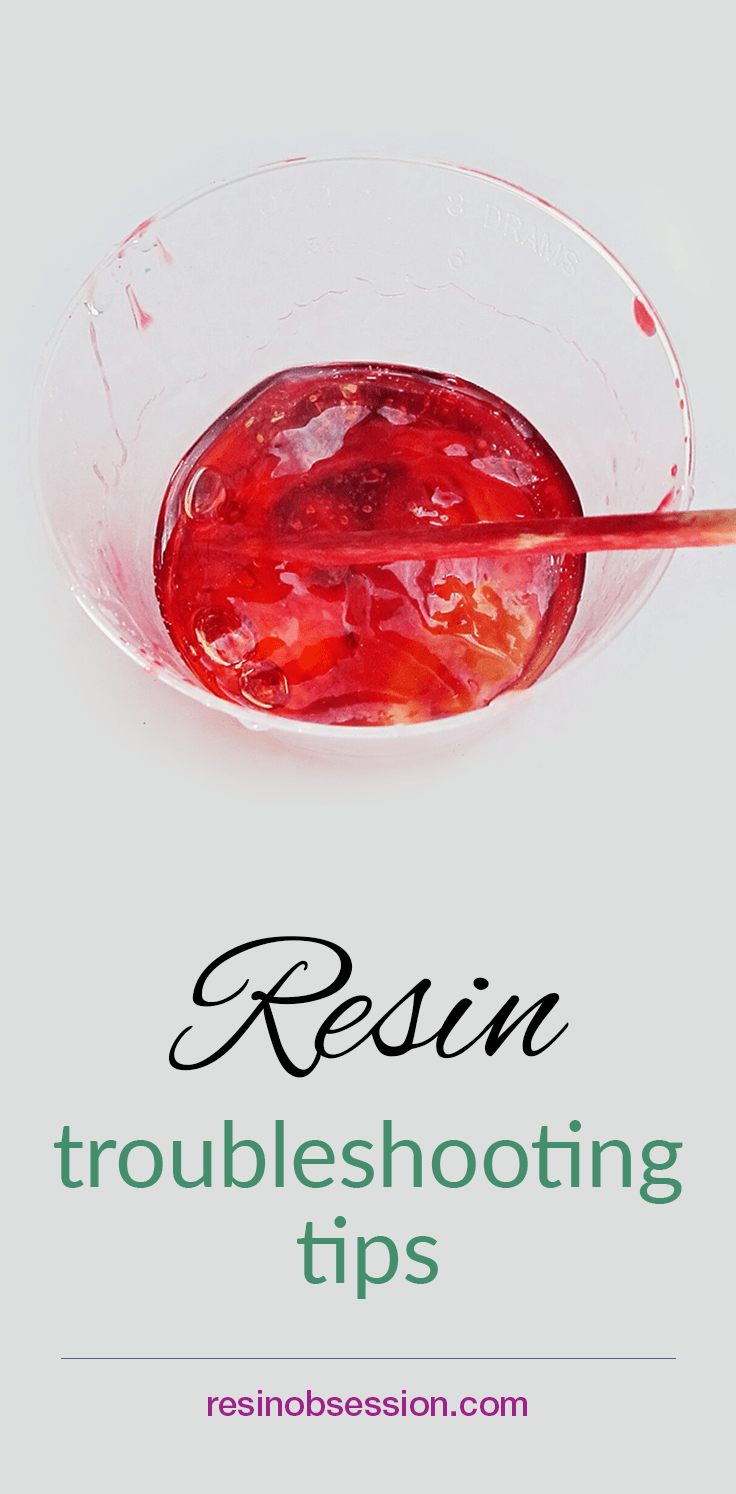
General resin troubleshooting tips
When working with resin, the technique is very of import to ensure outstanding results. Here are a few of the commonly encountered problems with using resin and suggestions for how to fix them.
Resin not cured or has not fully cured
Most likely cause:
Resin and hardener not mixed thoroughly. While mixing, information technology is of import to scrape the sides of mixing cups and stirring utensils during the process to make certain the mixture is well composite.
Other considerations:
Resin not mixed in the right ratio of resin to hardener. Recheck instructions and measure out both parts separately and accurately in graduated mixing cups.
Resin is cold or the room in which the resin is being mixed is common cold. The resin and hardener, forth with the room temperature, needs to be well-nigh 70 to 75 degrees Fahrenheit.
As well much wet in the resin casting. Use colorants designed for coloring resin.
Pot life of the resin is shorter than expected
Well-nigh likely cause:
Too much resin and hardener mixed at once. Attempt over again mixing less.
Other considerations:
Improper resin to hardener ratio.
Resin and/or hardener are likewise warm.
Pot life of the resin is longer than expected
Most likely cause:
The resin, hardener, or the room is besides cold.
Other considerations:
Mixing too small a volume of resin and hardener. Resins crave a certain amount to be mixed in lodge for the curing reaction to occur.
Improper resin to hardener ratio.
Cured resin has bubbles in it
Virtually likely cause:
Mixing the resin likewise forcefully. The all-time fashion to make sure bubbling aren't in your final casting is to avert creating them when mixing the resin.
Other considerations:
The resin is cold.
Resin is reacting to something included in information technology.
Bubbles release afterward calculation the inclusion to the resin.
Bonus:
Become my tips for getting bubbles out of resin
Resin surface is cured, but tacky
Most likely cause:
Resin and hardener were partially mixed. Be certain to mix completely, scraping the sides of the container and stir utensil several times while mixing.
Other considerations:
This is normal when using polyester resin.
Bonus:
Why is my resin sticky?
and How to fix pasty resin
Resin embedments have 'wet stains'
Most likely cause:
Item took upwards wet one time added to the resin.
Learn how to seal items earlier including them in resin.
Resin and/or hardener has yellowed
Most likely cause:
The resin kit is past its expiration date.
Other considerations:
Improper storage of the resin kit. Resin and hardener demand to be stored in a cool, dry place, abroad from sunlight and temperature swings.
The kit was opened and used and stored with a large, open infinite in the top of the bottle. Exposure to air will cause the resin to oxidize and turn yellow.
Bonus:
If this has happened to you, larn more virtually what to do with yellowing resin.
Resin has cured cloudy
Most likely cause:
Resin components are common cold.
Other considerations:
Resin kit contaminated with h2o.
What other experiences do you have with resin not curing properly?
Ready to get started with resin simply worried most making mistakes? Tried resin merely to observe you made a gooey, bubble-filled mess? It'south why I wrote the book, Resin Fundamentals. I've condensed my fourteen years of resin experience into the vital things you need to know to make something that will have people saying, "Whoa, you fabricated that?!" Buy the volume now and download copy in minutes.
Unpublished Blog Posts of Resin Obsession, LLC © 2022 Resin Obsession, LLC

Source: https://www.resinobsession.com/resin-frequently-asked-questions/resin-troubleshooting-tips/
Posted by: dambrosiosheast.blogspot.com
0 Response to "What Do You Do To Repair Resin Casting"
Post a Comment